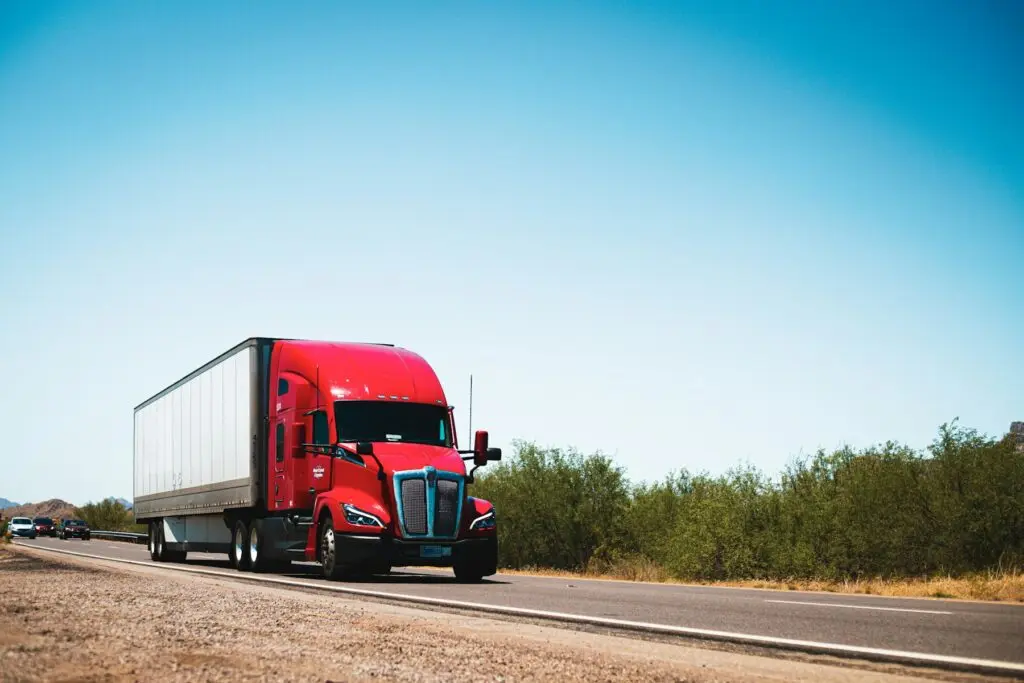
A damaged tail lift is two repairs at once. The platform, arms and mounting are structural steel carrying a rated load into the rear of the body, so a dock strike or a forklift hit is panel and structural work. The lift is also plant under NSW work health and safety law, so it comes out of service until the damage is dealt with and goes back to the manufacturer’s specification before anyone uses it again. Treated as a cosmetic dent, it becomes a platform that will not sit flush and cracks that keep returning.
What actually gets damaged
Tail lifts live in the worst place on the truck, first to meet a dock, a forklift tyne, a kerb or the vehicle behind, and the damage is rarely limited to the part you can see.
- The platform bent or twisted at the toe or outer edge, so it no longer sits flush with the floor or flat on the ground
- Columns, slider rails or the frame knocked out of square by a reversing hit
- Mounting plates, body mounts and the rear sub-frame, where the load is carried into the chassis rails
- Rams, hoses and fittings crushed, scored or weeping where they run along the frame
- The rear of the body itself: posts, door frames, latches, and the lamps and reflectors sitting exactly where a dock hits
- Cracked welds around the mounting, often the only visible sign the load path has moved
Why a bent platform is a structural problem
A tail lift carries its rated load through a short chain: platform to arms, arms to frame, frame to mounting plates, plates into the body sub-frame and the chassis. Bend one link and the load goes somewhere it was never designed to go. A platform straightened by eye may still open and lift, but if the mounting is out of square the lift loads unevenly every cycle and cracks return in the same places. So the work starts with measuring against the manufacturer’s figures, not with the dent.
The body side of the job matters on inspection too. The NHVR’s National Heavy Vehicle Inspection Manual gives authorised officers and industry “consistent criteria for heavy vehicle inspections”, and its Section 6 covers structure and body condition — the rear frame, mounts and panels around a lift. What applies depends on the vehicle, so check with the NHVR or your inspector.
A tail lift is plant, not just a truck part
This is the part fleets miss. The SafeWork NSW code of practice Managing the risks of plant in the workplace defines plant to include “anything fitted or connected to” machinery and vehicles, so a powered lifting platform bolted to a truck is plant at your workplace, and its duties are yours as the operator.
- Damage: plant with damage that poses a risk to health and safety “should be withdrawn from service until those risks have been controlled”
- Repair standard: plant “must be maintained and repaired according to the manufacturer’s specifications”
- Who does the work: the code points to the WHS Regulation duty to have maintenance, inspection and testing carried out by a competent person
- How often: per the manufacturer’s recommendations; if there are none, a competent person’s; and for inspection, at least annually where neither is practicable
- Records: SafeWork NSW’s guide to inspecting and maintaining plant adds that the plant “must not be returned to service until all safety-related malfunctions and problems have been corrected”, and that inspection and maintenance records should be kept
Codes of practice are admissible in court proceedings under the WHS Act. This is general information only — check your own obligations with SafeWork NSW and your competent person.
Repair or alteration?
Putting a lift back to the manufacturer’s specification is a repair. Changing the platform, the capacity, the controls or the mounting is an alteration, and the code is blunt: alter plant and “the person will also be a designer or manufacturer, and those obligations will apply”. Altered plant also has to be inspected and tested against the new design first, so if a straight repair is not possible, talk to the lift manufacturer before anyone changes anything.
What to do when a tail lift is damaged
- Take it out of service so the next driver cannot use it. A note on a run sheet is not a control.
- Photograph it before anything is moved, including the mounting and body rear frame.
- Check the body and mounts, not only the lift: doors that no longer latch mean the rear of the body has moved.
- Get the lift’s make, model, rated capacity and repair information together — the standard is the manufacturer’s, not an opinion.
- Have the panel, structural and paint work quoted separately from the hydraulic work, so each part is visible.
- Have it inspected and tested by your competent person before it returns to the road.
- Keep the inspection, repair and test records with the vehicle’s file.
Where we fit, and where we do not
Max Smash Repairs is a heavy vehicle panel and paint shop, so on a tail lift job that means the structural and panel work around and under the lift, the rear of the body, truck body repairs, and the tail lift and hydraulic repairs themselves. Sheet metal fabrication is in house, so mounting plates and rear frame sections can be made rather than waited on, and the repair is refinished to match the fleet. If the impact reached the chassis, laser chassis and axle alignment is done here too.
What is not ours: proprietary control gear and electrics, and load testing or certifying the lift, which stay with the lift manufacturer or its agent. The sign-off belongs to your competent person, engineer or inspector, not to the repairer. We will tell you when a repair is not worth doing, and quotes are itemised. If the truck cannot be driven in, we arrange pick-up and delivery.
Common questions
Can a bent tail lift platform be straightened?
Sometimes. It depends how far it has moved, where the bend is and what the manufacturer’s specification allows. A platform out at the toe may come back; a frame or mounting that is out of square will not hold a straightened platform for long.
Does a damaged tail lift have to be taken out of service?
SafeWork NSW’s code says plant with damage that poses a risk to health and safety should be withdrawn from service until those risks are controlled. How that applies to a particular lift is a judgement for your competent person, so check with them and SafeWork NSW.
Will tail lift damage affect a heavy vehicle inspection?
The body, its mounts and the structure around the lift are assessed on condition, and damaged lamps or reflectors beside the lift are their own problem. What an inspector requires depends on the vehicle, so check with the NHVR or your inspector.
Is the damage part of the same insurance claim as the body?
Usually it is one incident, quoted as one job with the lift itemised separately. Whether it is covered depends on your policy, so talk to them about the claim, and check with your insurer before work starts.
More answers are on the FAQ page, and the rest of our truck work on the truck repairs page.
Get a damaged tail lift looked at
Max Smash Repairs is a family-owned heavy vehicle panel and paint shop that has worked from the same Smithfield premises since 1984. Upload up to 20 photos and your vehicle details through our online assessment and we will reply with a realistic estimate or tell you if we need to see the truck. Or call (02) 9756 5295, Monday to Friday, 8:00am to 4:30pm.