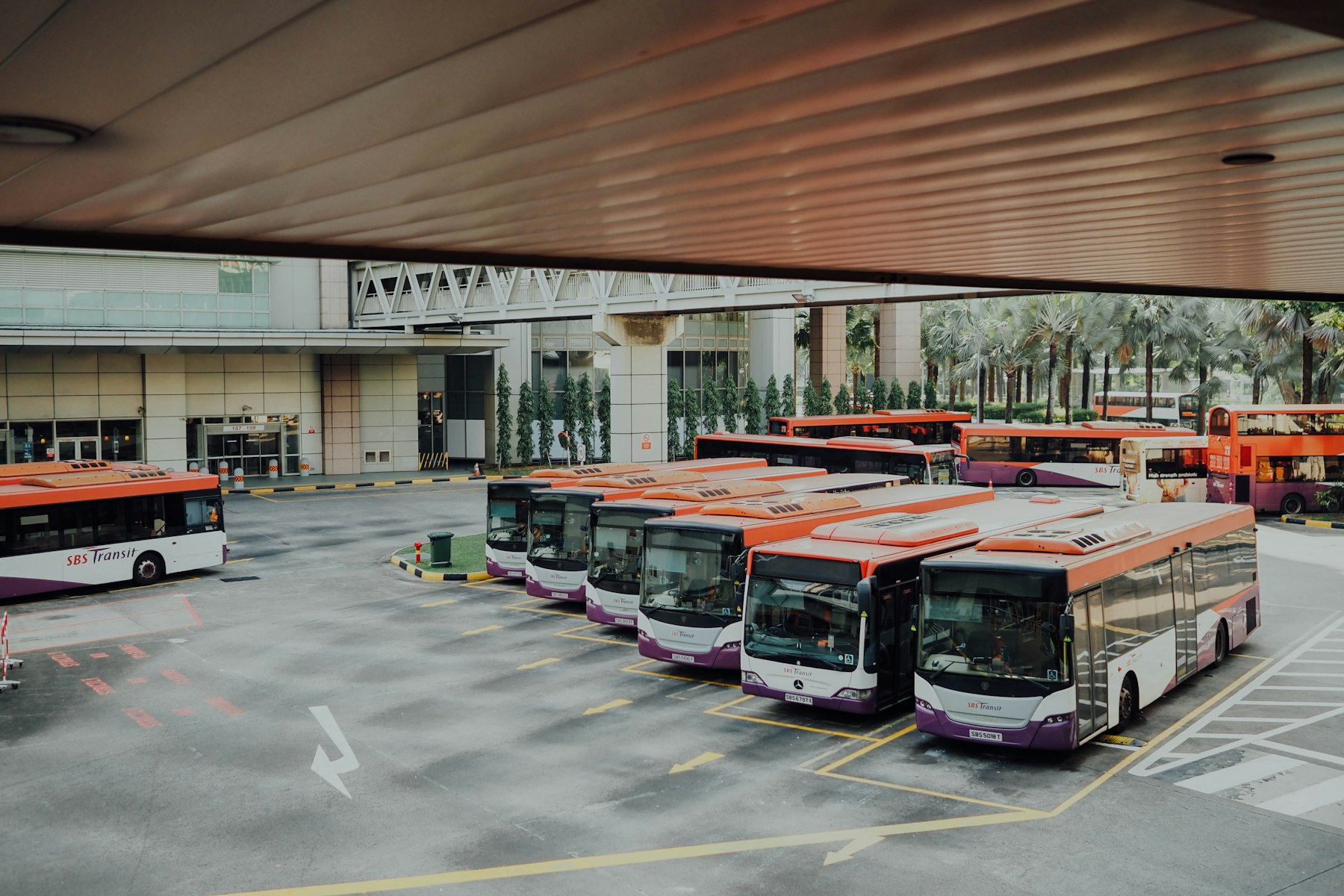
A bus that has been in a collision needs three separate things put right before it carries passengers again: the body structure back to shape, every safety item working as it should, and any defect notice dealt with. Bus smash repairs are not just truck repairs on a longer vehicle. The body is a structure people sit inside, the damage often runs the length of a panel rather than sitting in one corner, and the doors, emergency exits and wheelchair lift all have to function exactly as they did before the hit.
What makes bus and coach smash repairs different
On a prime mover, a hit usually damages a cab or a panel that can be treated on its own. On a bus or coach, the panels are part of a long, relatively light structure, so one impact can pull the frame out of line well beyond the obvious dent. A side swipe on a kerbside pole or a low-speed hit at a bus stop can leave a ripple running several metres down the side.
That is why bus and coach repairs at our Smithfield workshop are treated as body work rather than panel work: full-length body repairs, in-house sheet metal fabrication and fibreglass repair, and pressurised paint baking ovens sized to take a whole coach rather than just a cab. Laser chassis and axle alignment, including resetting steering geometry, is done in-house, so a bus tracking oddly after an incident can be measured rather than guessed at.
Damage that takes a bus off the road
Not every dent is a compliance problem, but some are. Under the Heavy Vehicle National Law, an authorised officer can issue a defect notice in one of three categories, which the NHVR sets out in its guidance on heavy vehicle defects:
- Major — the officer believes using the vehicle poses an imminent and serious safety risk. The bus can only be moved in the way and to the places the notice states, or after the repairs are done.
- Minor — there is a safety risk, but not an imminent and serious one. The officer can allow continued use under conditions and up to a stated date.
- Self-clearing — no safety risk, or an obscured number plate. The vehicle can be used up to the date in the notice, and no more than 28 days after it was issued.
The notice says what corrective action is needed, what inspection clears it, and whether a certificate of roadworthiness is required. For a New South Wales registered vehicle, clearance generally means an Authorised Examiner at an Authorised Inspection Station accredited for heavy vehicles, and it cannot be done online. Rules vary by jurisdiction and by notice, so check the notice and confirm with NHVR or your inspector.
The safety equipment that has to work again
This is the part that gets missed when a bus is repaired by a shop used to trucks. A hit on the side of a body can distort an emergency exit aperture just enough that the exit still looks right but no longer releases cleanly. The same goes for a wheelchair lift or ramp that has been struck, or that sits in a section of body that has moved.
Two things sit behind this. In NSW, the Passenger Transport Act 1990 requires accreditation for public bus services, and your accreditation obligations do not pause because a vehicle has been in a smash. Separately, the Disability Standards for Accessible Public Transport 2002 apply to bus and coach services and require operators to make their services accessible — which is difficult to argue if the boarding device on a returned vehicle no longer works properly.
So emergency exit and wheelchair lift function testing is part of the repair, not an optional extra. If you are not sure what your accreditation requires after a collision, check with Transport for NSW or your auditor.
How a bus smash repair runs
- Assessment. Send photos and vehicle details, or bring the bus in. If it cannot be driven, we arrange pick-up and delivery.
- Strip and measure. Damaged sections come off so the real extent is visible, and the structure is measured rather than eyeballed.
- Structural repair. Body framing, panels and any chassis work are put back to shape, with sheet metal fabricated in-house where a section has to be made rather than bought.
- Panel and fibreglass work. Fibreglass sections are repaired; smaller smart repairs are cured with infrared lamps.
- Paint. Colours are matched and mixed on site, then baked in an oven long enough to take the whole vehicle.
- Refit and function test. Doors, emergency exits and any wheelchair lift are refitted and tested through their full operation.
- Final check. The vehicle is checked over before it goes back to you.
If a repair turns out bigger than the first look suggested, we would rather tell you early than at the end. There is more on how we work with bus and coach operators on our fleet page.
Getting the livery to match
A repaired panel half a shade out is obvious on a bus: the sides are large, flat and seen in daylight from a distance. Across a fleet it is worse, because the repaired vehicle parks next to an untouched one.
We are an authorised PPG refinisher and mix and match colour on site, which is what keeps a fleet finish consistent. PPG paintwork carries PPG’s manufacturer lifetime paint warranty, and full fleet livery repaints are done in the same ovens.
Insurance claims and quotes
We are an approved repairer for all major insurance companies, so most collision work runs as a claim. Quotes are itemised — panel, structural and paint quoted separately — so you and the assessor can see what sits where instead of one lump figure. If a repair is not economically worth doing, we will say so rather than quote it.
Cover, excess and whether you need approval before repairs start all vary, so check your policy or ask your insurer first.
Bus smash repair FAQs
Can a damaged bus panel be repaired, or does it have to be replaced?
It depends what has moved behind it. A dented or creased outer panel can often be repaired, and we fabricate sheet metal in-house where a section has to be remade. Where the framing behind the panel has been pushed out of line, the structure is dealt with first — repairing the skin over a distorted frame only hides the problem.
What happens if my bus is issued with a major defect notice?
It means the officer considers using the vehicle an imminent and serious safety risk, so it can only be moved as the notice allows, or once repairs are done. If it cannot be driven to us, we arrange pick-up. We do the repair; the inspection that clears the notice happens as the notice directs. Confirm anything unclear with NHVR or your inspector.
Can you match our existing fleet colours?
Yes. As an authorised PPG refinisher we mix and match colour on site, so a repaired vehicle stays consistent with the rest of the fleet.
Can I get a quote without bringing the bus in?
Usually. Upload up to 20 photos with the vehicle details through our online assessment page and we will come back with a realistic estimate, or tell you if we need to see the vehicle in person. More answers are on our FAQ page.
Get your bus or coach looked at
Max Smash Repairs is a family-owned heavy vehicle panel and paint shop working from the same Smithfield premises since 1984, for operators across Wetherill Park, Blacktown, Parramatta, Liverpool, Eastern Creek and greater Sydney. Send us photos for a quote, or call (02) 9756 5295, Monday to Friday, 8:00am to 4:30pm.