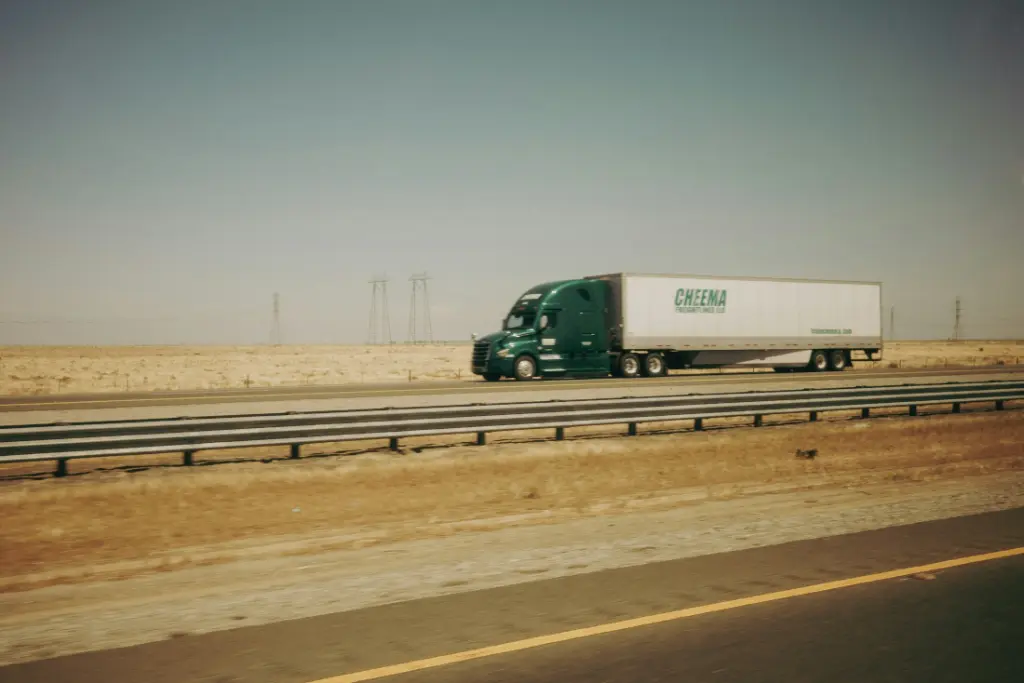
A truck repaint only looks right if the colour is measured and mixed, not eyeballed. Fleet paint drifts over the years — sun fades it, batches and suppliers sit slightly apart, and a panel sprayed five years ago is no longer the colour that left the production line. So a repaint is a colour-matching job as much as a spraying job, and the first call to make is whether you are painting one panel, one side or the whole vehicle.
One panel, one side, or the whole vehicle
Three different jobs get called a repaint:
- A smart repair — a small, contained area repaired and blended in place, cured with infrared lamps rather than a full oven cycle. Right for a scuff, a stone-chipped lower panel or a small dent where the surrounding paint is sound.
- A partial repaint — the repaired panel plus enough of the neighbouring panels for the colour to blend into. On a cab that usually means a door and the panel either side of it, not the door alone.
- A full repaint — the whole cab, the whole body, or a full-length coach. Usually because damage crosses several panels, the paint has failed generally, or the livery is changing and matching the old colour is not the point.
Patching a single panel on a faded truck is the one that disappoints: the new paint is correct and the panels around it are not, so the repair reads as a repair from across the yard. If the vehicle has faded generally, blending outward or painting the whole cab is the honest answer, and should be quoted that way.
How fleet colour is matched
Max Smash Repairs is an authorised PPG refinisher and mixes paint on site. That matters twice over: the paint is matched to what the panels actually are now, not just the code on the build plate, and because the same colour is mixed from the same system each time, the sixth truck through still matches the first five.
Operators can make this easier by keeping their own records: the paint code and mixing formula for each livery colour, and which vehicles have been resprayed and when. A fleet with written colour records gets consistent work; a fleet relying on memory gets drift. That record-keeping sits with the operator, not the workshop.
What actually happens in a repaint
The spraying is the short part. Most of the work is underneath:
- Assess the substrate. Paint does not hold over rust or cracked filler, so anything unsound comes out first. Where metal is gone it is cut out and new metal fabricated and fitted in the workshop rather than filled over.
- Repair the panel or structure. Dents, splits and fibreglass damage are fixed and the panel brought back to shape before colour is considered.
- Match and mix the colour, and spray a test card to check it against the vehicle in the light it will be seen in.
- Mask and remove. Lamps, mirrors, badges and trim come off or get masked properly.
- Prime, spray and bake. Pressurised paint baking ovens sized for a prime mover cab or a full-length coach cure the paint properly rather than leaving it to air dry in a dusty yard.
- Refit and check. Everything that came off goes back on, in the right place, working.
What has to go back on — and stay readable
This is where a cheap repaint turns into a roadworthiness problem later. Two parts of the National Heavy Vehicle Inspection Manual are worth knowing before anything is masked.
Section 1, Vehicle Identification, rejects a vehicle where no VIN or chassis number is present, or where the VIN, chassis number or secure vehicle identification marking has been altered or tampered with. It also rejects a modified vehicle not fitted with the appropriate modification plate identifying the modification. Identification markings are not cosmetic: they must survive the job, not be filled, ground back or sprayed over.
Section 8, Lights and Reflectors, rejects compulsory reflectors that are damaged, obscured, deteriorated, not installed in the correct location or not fitted, and lights that are inoperative, obscured, deteriorated, insecure or not fitted where required. Overspray on a lens, or a reflector refitted in the wrong spot, is a rejection item in its own right — the ground covered in our guide to truck lights, mirrors and what inspectors check.
Signage, decals and vinyl livery are a separate trade. Max Smash Repairs does the panel, structural and paint work; the signwriter or wrap installer handles the graphics on top. Settle who does what, and in what order, before the vehicle moves.
If the colour on the registration changes
A livery or colour change means the registration record no longer describes the vehicle. Service NSW lists colour among the basic vehicle details that can be changed on a registration record, and notes an inspection report may not be needed where only the colour has changed. For a heavy vehicle, it says changes to vehicle details are notified in person at a Service NSW Centre and need verifying by an examiner authorised in a heavy vehicle scheme or a Transport for NSW official. Check the current requirements for your vehicle before booking the work, not after.
What to ask for in the quote
Quotes here are itemised, with panel, structural and paint work priced separately. On a repaint that split is the useful part: it shows how much of the job is metalwork you needed anyway and how much is finish. Ask which option you are being quoted — smart repair, partial or full — and how far the blend extends, because that is the difference between a repair that disappears and one that does not. Ask for the terms of the PPG manufacturer lifetime paint warranty in writing too. And if the paint and metalwork together are not worth what the vehicle is, we will say so rather than quote it.
The panel and structural side of the work sits on our truck and prime mover repairs page, and the same paint facilities handle bus and coach bodies up to full length.
Common questions
Will a repainted panel match the rest of my truck?
If the colour is matched to the vehicle as it is now and blended into the neighbouring panels, yes. If a single faded panel is sprayed to the original code with no blend, no — it will be correct and still look wrong.
Can you repaint a whole coach or prime mover cab?
Yes. The paint baking ovens are sized for a prime mover cab or a full-length coach, so the vehicle cures in one piece rather than in sections.
Can you paint over rust?
No. Paint over rust fails from underneath and takes the repair with it. Unsound metal is cut out and replaced with new metal fabricated in the workshop, then finished. Where rust is extensive that can be the larger part of the quote, which is why it is itemised separately.
How do I get a repaint quote?
Upload up to 20 photos with your vehicle details through our online assessment, including a shot of an undamaged panel in daylight so the current colour is visible. We will reply with a realistic estimate or tell you if we need to see the vehicle. More answers are on our FAQ page.
Get your repaint quoted properly
Max Smash Repairs is a family-owned heavy vehicle panel and paint shop working from the same Smithfield premises since 1984, for transport, bus and plant operators across Sydney. Send us photos for a quote, or call (02) 9756 5295, Monday to Friday, 8:00am to 4:30pm.