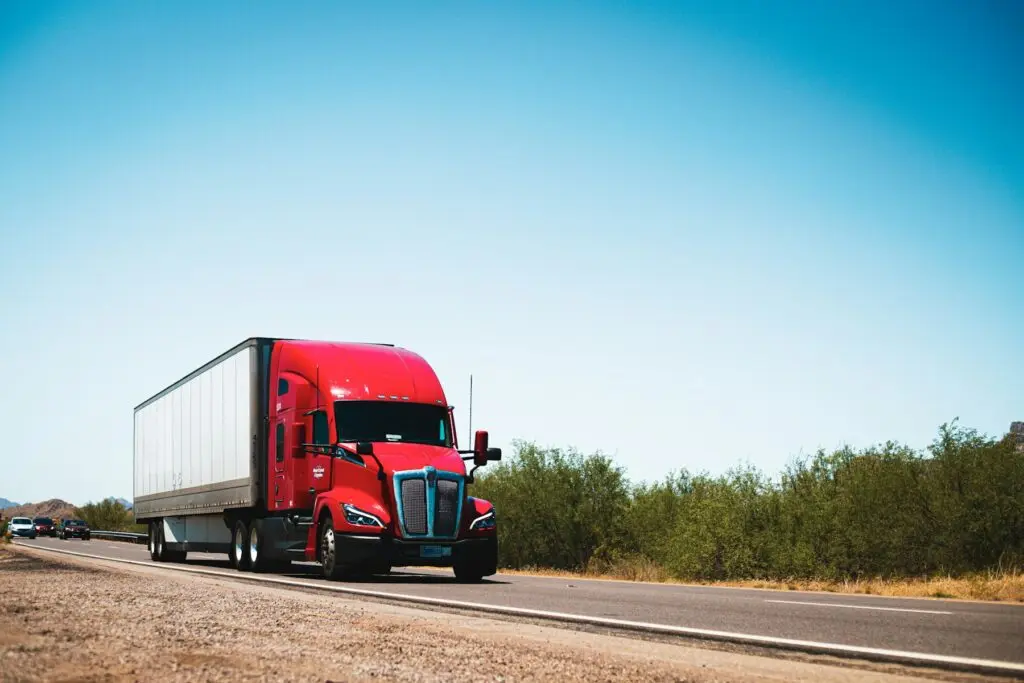
Mostly it doesn’t, and where it does, the difference is in the panels and the parts rather than the method. A Mack, a DAF, an Isuzu, a Hino and a Volvo all get measured, straightened, panelled and painted against the same reference: the manufacturer’s own specifications and repair guidelines. What changes by make is how the cab is built, what the outer skins are made of, how quickly a replacement panel can be had, and how the colour is matched.
What stays the same whatever the badge
Panel and paint work follows the same discipline across every make. The frame and axles are measured before anything is pulled, because a cab that doesn’t sit right is often a chassis problem wearing a panel disguise, and structural damage is repaired to the manufacturer’s specification rather than to the eye. The equipment that matters isn’t make-specific either: laser chassis and axle alignment, a paint oven long enough for a full prime mover cab, and the fabrication capability to make a panel that can’t be bought. That’s why a workshop set up for truck and prime mover repairs can take any badge that fits through the door.
Bonneted or cab-over matters more than the brand
The biggest split isn’t Mack against Volvo — it’s bonneted against cab-over. Most Mack, Kenworth and Western Star models sold here are bonneted conventionals, with the engine ahead of the cab under a separate bonnet assembly — often a large one-piece composite moulding with its own hinges and surrounds. A front-corner hit tends to concentrate in bolt-on components — bonnet, guard, bumper, step, sun visor, mirror arms — which is usually the cheaper kind of damage. The risk is what sits behind them: bonnet hinge mounts and radiator supports tie back into the frame, so a knock that looks cosmetic can still have moved something structural.
Most DAF, Volvo, Scania, Mercedes-Benz, Isuzu, Hino, Fuso, UD and Iveco models are cab-overs, with the cab above the engine on mounts and, on many heavy models, its own cab suspension and tilt mechanism. A front impact loads the cab structure itself, so the mounts, tilt pivots and suspension are checked as part of the repair rather than treated as separate mechanical items. Door gaps, the windscreen aperture and the tilt action are the tell: if the cab doesn’t tilt and settle cleanly afterwards, the structure hasn’t come back to specification. There’s more in our guide to prime mover cabin repair.
Panel materials differ more than operators expect
Heavy vehicle cabs are not all steel. Across the makes you’ll find steel cab shells, aluminium panels, fibreglass and composite mouldings for bonnets, guards and roof fairings, and moulded plastic for bumpers and trim, often several in one front end.
Each is repaired differently. Steel can be pulled, worked and filled; aluminium needs different technique and consumables; fibreglass and composite panels are laminated and rebuilt rather than beaten, so a cracked composite bonnet can often be repaired in-house when a replacement would be slow to get. A repairer who only works in steel reaches for replacement sooner than one who can also laminate, and that shows up in the quote.
Parts supply is usually the real delay
Where the make genuinely drives the outcome is parts. Heavy vehicle panels are low-volume items, and availability varies by make, model and age — a current-model panel and the same one for a ten-year-old truck are not the same proposition. Confirm availability with your dealer or parts supplier before building a plan around it, and establish early which panels are repairable and which have to be bought — that’s what moves a repair plan.
Paint and fleet colours
Every manufacturer has its own colour codes, and a fleet colour applied years ago has since weathered, so matching to a code alone often gives a panel that reads as newer than the one beside it. The answer is colour matching and mixing against the vehicle in front of you, which is what we do as an authorised PPG refinisher, with PPG’s manufacturer lifetime paint warranty on the refinish.
For a liveried fleet this is worth being fussy about: one repaired door in a different shade undoes the whole unit. If you run mixed makes in one livery, as most transport and logistics fleets do, have the colours mixed and recorded once so repairs across different trucks come back consistent.
Repair, or modification?
Work that returns a vehicle to the manufacturer’s specification is a repair. Work that takes it away from that specification may be a modification, and the rules there are different. Under the NHVR’s framework, common and complex heavy vehicle modifications require approval by an Approved Vehicle Examiner or the NHVR, while a minor modification needs no approval provided the vehicle stays within the manufacturer’s specifications and complies with the Heavy Vehicle (Vehicle Standards) National Regulation — see the NHVR’s guidance on heavy vehicle modifications. So if work would change how something is mounted, rated or constructed rather than restore it, talk to an AVE or the NHVR first — sign-off sits with them, not the panel shop. The same applies to driver-assistance cameras or radar behind a damaged bumper or windscreen: ask the dealer what needs recalibrating.
Getting a damaged truck assessed, whatever the make
- Photograph it properly. Wide shots of each damaged side, close-ups of every panel, the door gaps and the build plates. Upload up to 20 photos with the vehicle details through our online assessment.
- Get the repair-or-replace call early. We reply with a realistic estimate, or tell you if the truck needs seeing in person. Quotes are itemised, with panel, structural and paint priced separately, and if a repair isn’t economically worth doing we’ll say so rather than quote it.
- Settle the claim path. If it’s going through insurance, the assessment runs alongside the quote — we’re an approved repairer for all major insurance companies, and there’s more on our heavy vehicle insurance claims page. If the truck can’t be driven, we arrange pick-up.
- Measure before panelling. Chassis and axles are measured on the laser alignment bench and the steering geometry reset, so panel work is fitted to a true frame.
- Panel, paint, check. Panels repaired or replaced, colour matched to your livery, paint cured in the booth, then doors, gaps and — on a cab-over — the tilt action checked.
Common questions
Do you need to be a dealer for a make to repair it?
Not for panel and paint work. Structural and body repairs are done to the manufacturer’s specifications and repair guidelines, and that’s what the work is measured against. Where something make-specific sits outside panel and paint — a proprietary electronic calibration, say — confirm it with the dealer.
Can a cracked fibreglass bonnet be repaired instead of replaced?
Often, yes. Composite and fibreglass panels can be laminated and rebuilt, and we do that in-house alongside sheet metal fabrication. Whether it’s the right call depends on where the crack runs and what the panel does structurally, so it needs looking at.
Does the make change what my insurer will cover?
Cover and repairer choice come from your policy, not the badge on the truck, so check your policy or ask your insurer. What the make can affect is the assessment, because parts availability feeds into whether a unit is repaired or written off. More answers on our FAQ page.
Send us photos of the damage
Max Smash Repairs is a family-owned heavy vehicle panel and paint shop working from the same Smithfield premises since 1984, and we take any make from across greater Sydney. Send us photos for a quote, or call (02) 9756 5295, Monday to Friday, 8:00am to 4:30pm.