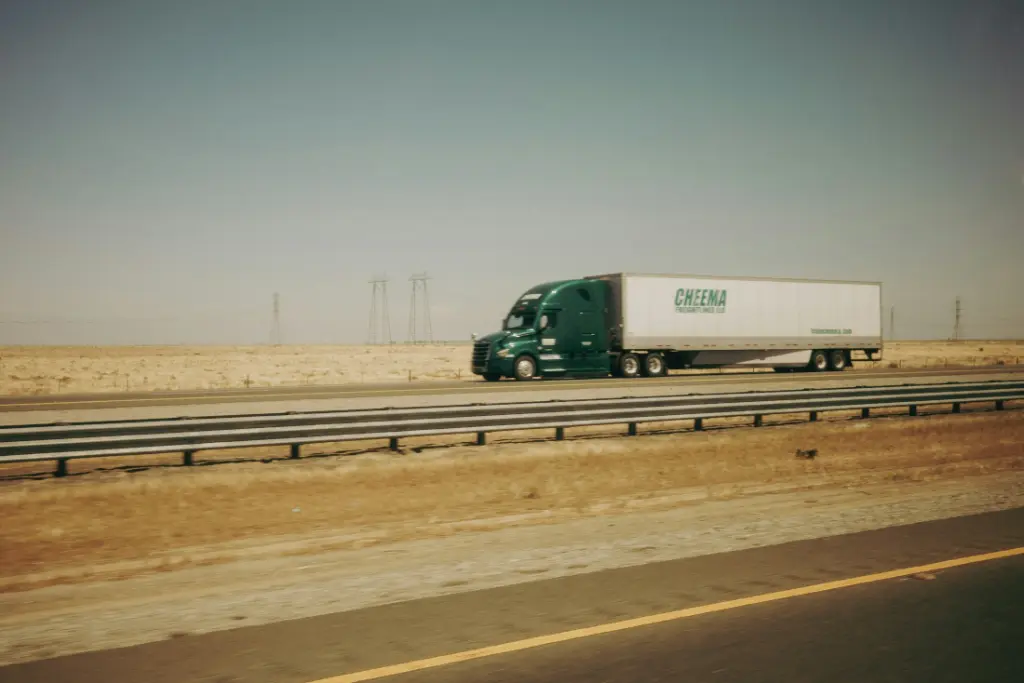
Most prime mover cabin damage is repairable. Skins, doors, roof panels, guards, steps, mirror arms and interior trim can usually be repaired or replaced and refinished. What decides the job is whether the cab’s structure has moved: the A and B pillars, the door apertures, the cab floor and the cab mounts. Photos are enough to start a quote, but that structural call is made with the cab stripped and measured in the workshop, against the manufacturer’s figures. Get that order wrong and you end up with doors that never quite shut.
What counts as cabin damage on a prime mover
Cab damage on a heavy vehicle rarely looks like car damage. The impacts are slower but heavier, and damage spreads further than the dent suggests. The patterns we see most often in truck and prime mover repairs are:
- Front impacts. Bumper, grille, front panel, headlight surrounds, steps and mudguards. On many models the front panel is fibreglass, so the repair method is different from the steel behind it.
- Side swipes. Doors, mirror arms, the A pillar and sleeper side panels. A side swipe that looks like a scrape can still push the door aperture out of square.
- Roof damage. Low awnings, overhanging branches, car park beams and roller doors. Roof skins, hatches and air deflector mounts take the hit.
- Rear cab wall damage. A load shift or a trailer that has come forward in a hard stop.
- Follow-on damage. Wiring, air lines and glass sitting behind the panel that was hit, which only shows up once the panel comes off.
That last one is why a first estimate stays an estimate until the panel is off.
What gets repaired and what gets replaced
There is no single rule. The decision comes down to the material, the location of the damage and what the manufacturer’s repair guidelines allow for that part of the cab.
| Damaged area | Usual approach |
|---|---|
| Steel or aluminium cab skins, guards, steps | Repair and refinish; replacement panel where the metal is stretched or torn |
| Fibreglass front panels and spoilers | Fibreglass repair; replacement where mounting points are damaged |
| Doors | Skin repair where the frame is straight; replacement where hinges, latches or the frame have moved |
| A and B pillars, door apertures, cab floor | Measured first; repaired or sectioned only where the manufacturer allows |
| Cab mounts and tilt mechanism | Repaired or replaced as a safety item, never patched |
Structural cab damage often travels into the frame underneath, a separate job with its own measurements. If the truck has taken a heavy front or rear hit, read our guide on truck chassis repair and straightening as well, because the cab cannot be squared up properly on a frame that is still out.
How a prime mover cabin repair runs
A cab repair generally follows these steps:
- Initial assessment. Photos and vehicle details are enough to start. Through our online assessment you can upload up to 20 photos, and we reply with a realistic estimate or tell you if we need to see the truck in person. If the prime mover cannot be driven in, we arrange pick-up and delivery.
- Strip and inspect. Damaged panels, trim and glass come off so the structure behind them can be seen. This is where hidden wiring, air line and pillar damage is picked up, and where an estimate becomes a firm quote.
- Measure. The cab and the frame under it are measured against the manufacturer’s specifications. We use laser chassis and axle alignment, including resetting steering geometry, so the cab is refitted to something that is actually square.
- Panel and structural repairs. Panel beating, in-house sheet metal fabrication where sections are no longer available, and fibreglass repair for front panels. Rust found under a damaged panel is dealt with now, not painted over.
- Paint. As an authorised PPG refinisher we colour match and mix in-house, and cure in pressurised paint baking ovens sized for a prime mover cab. Smaller repairs are cured with infrared lamps. PPG’s manufacturer lifetime paint warranty applies to the refinish.
- Refit and check. Panels, glass, seals, lights and mirrors go back on, and door and panel gaps, latching and seal fit are checked before the truck leaves.
Getting the prime mover back on the road
Cab damage is not only a cosmetic problem. Damaged doors, glass, mirrors, seats and steps are all items an authorised officer can inspect, and the criteria they work to are set out in the NHVR’s National Heavy Vehicle Inspection Manual.
If the truck has been issued a defect notice, the repair is only half of it. According to the NHVR, a minor or major defect notice states the type of inspection required, the type of facility where it must be done and who must carry it out. We do the repair work; the clearance inspection happens where and by whom your notice directs. Max Smash Repairs is not an authorised inspection station, so read the notice carefully or check with the NHVR or your inspector before you plan the truck back into a run.
Quotes, insurance and fleet downtime
We are an approved repairer for all major insurance companies, and quotes are itemised so panel, structural and paint work are priced separately. That matters on a cab job: the structural line is the one that moves once the panels are off. Cover for a damaged cab varies between policies, so check your policy or check with your insurer before you commit to a repair path.
We will also tell you when a repair is not economically worth doing. On an older prime mover with a hard hit through the pillars, replacing the cab or retiring the unit can be the better call, and better heard at quote stage than halfway through. For operators running several units, we work with transport and logistics fleets across Western Sydney, including Wetherill Park, Prospect, Eastern Creek, Erskine Park, Moorebank and Yennora, and take work from across greater Sydney.
Frequently asked questions
Can a damaged prime mover cab be repaired instead of replaced?
Usually, yes. Skins, doors, roof panels, guards and front panels are routinely repaired or replaced individually. A full cab replacement is normally only on the table when the pillars, floor or cab mounts have moved beyond what the manufacturer allows to be repaired, or when the sums no longer stack up.
How do I get a quote if the truck cannot be driven?
Send photos through the online assessment page with the vehicle details, and we will come back with a realistic estimate or tell you we need to see it. If it cannot be driven in, we arrange pick-up and delivery.
Will the repaired panel match the rest of my fleet?
That is the point of matching and mixing colour in-house. As an authorised PPG refinisher we mix to the fleet colour rather than to the panel next to it, which keeps a fleet consistent when units come through one at a time.
Does cab damage always mean a defect notice?
No. It depends on what is damaged and whether the vehicle still meets heavy vehicle standards. Damage that affects vision, door latching, seating, steps or lighting is more likely to attract attention than a dented guard. More answers are on our FAQ page. This article is general information only, not legal, compliance or insurance advice.
Get your prime mover cab assessed
Max Smash Repairs is a family-owned heavy vehicle panel and paint shop that has worked from the same Smithfield premises since 1984, on trucks and prime movers, buses and coaches, and cranes and heavy plant. Send us photos for a quote, or call (02) 9756 5295, Monday to Friday, 8:00am to 4:30pm.