Author: Max Smash Repairs

  • Bus Smash Repairs: Getting a Damaged Bus Back Into Service

    Bus Smash Repairs: Getting a Damaged Bus Back Into Service

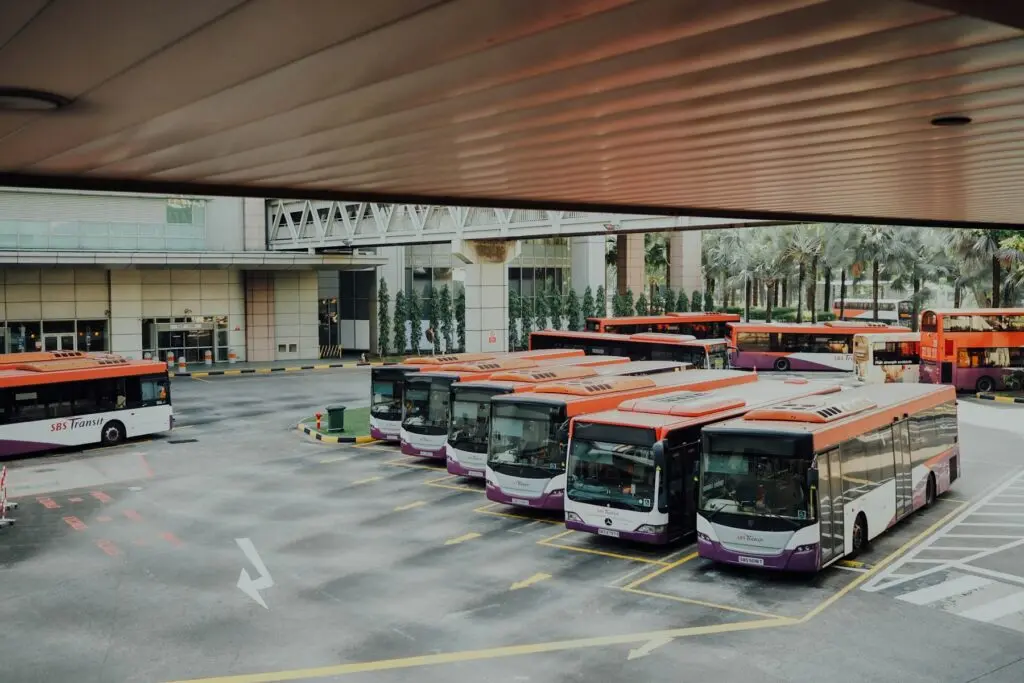
    A bus that has been in a collision needs three separate things put right before it carries passengers again: the body structure back to shape, every safety item working as it should, and any defect notice dealt with. Bus smash repairs are not just truck repairs on a longer vehicle. The body is a structure people sit inside, the damage often runs the length of a panel rather than sitting in one corner, and the doors, emergency exits and wheelchair lift all have to function exactly as they did before the hit.

    What makes bus and coach smash repairs different

    On a prime mover, a hit usually damages a cab or a panel that can be treated on its own. On a bus or coach, the panels are part of a long, relatively light structure, so one impact can pull the frame out of line well beyond the obvious dent. A side swipe on a kerbside pole or a low-speed hit at a bus stop can leave a ripple running several metres down the side.

    That is why bus and coach repairs at our Smithfield workshop are treated as body work rather than panel work: full-length body repairs, in-house sheet metal fabrication and fibreglass repair, and pressurised paint baking ovens sized to take a whole coach rather than just a cab. Laser chassis and axle alignment, including resetting steering geometry, is done in-house, so a bus tracking oddly after an incident can be measured rather than guessed at.

    Damage that takes a bus off the road

    Not every dent is a compliance problem, but some are. Under the Heavy Vehicle National Law, an authorised officer can issue a defect notice in one of three categories, which the NHVR sets out in its guidance on heavy vehicle defects:

    • Major — the officer believes using the vehicle poses an imminent and serious safety risk. The bus can only be moved in the way and to the places the notice states, or after the repairs are done.
    • Minor — there is a safety risk, but not an imminent and serious one. The officer can allow continued use under conditions and up to a stated date.
    • Self-clearing — no safety risk, or an obscured number plate. The vehicle can be used up to the date in the notice, and no more than 28 days after it was issued.

    The notice says what corrective action is needed, what inspection clears it, and whether a certificate of roadworthiness is required. For a New South Wales registered vehicle, clearance generally means an Authorised Examiner at an Authorised Inspection Station accredited for heavy vehicles, and it cannot be done online. Rules vary by jurisdiction and by notice, so check the notice and confirm with NHVR or your inspector.

    The safety equipment that has to work again

    This is the part that gets missed when a bus is repaired by a shop used to trucks. A hit on the side of a body can distort an emergency exit aperture just enough that the exit still looks right but no longer releases cleanly. The same goes for a wheelchair lift or ramp that has been struck, or that sits in a section of body that has moved.

    Two things sit behind this. In NSW, the Passenger Transport Act 1990 requires accreditation for public bus services, and your accreditation obligations do not pause because a vehicle has been in a smash. Separately, the Disability Standards for Accessible Public Transport 2002 apply to bus and coach services and require operators to make their services accessible — which is difficult to argue if the boarding device on a returned vehicle no longer works properly.

    So emergency exit and wheelchair lift function testing is part of the repair, not an optional extra. If you are not sure what your accreditation requires after a collision, check with Transport for NSW or your auditor.

    A third obligation decides who signs the equipment back into service. A wheelchair lift or hoist is plant under NSW work health and safety law. SafeWork NSW’s code of practice Managing the risks of plant in the workplace defines plant as machinery, equipment, appliances, implements and tools and “anything fitted or connected to those things”, with vehicles given as an example.

    Two duties follow. The code says plant with damage that poses a risk to health and safety “should be withdrawn from service until those risks have been controlled” — a recommendation in the code’s own terms, not a strict requirement — while plant “must be maintained and repaired according to the manufacturer’s specifications”. WHS Regulation clause 213 requires the person with management or control of plant to ensure maintenance, inspection and, if necessary, testing is carried out by a competent person. We do the body and structural work and function test the exit or lift afterwards; the sign-off belongs to your competent person, engineer or inspector, not to the workshop.

    How a bus smash repair runs

    1. Assessment. Send photos and vehicle details, or bring the bus in. If it cannot be driven, we arrange pick-up and delivery.
    2. Strip and measure. Damaged sections come off so the real extent is visible, and the structure is measured rather than eyeballed.
    3. Structural repair. Body framing, panels and any chassis work are put back to shape, with sheet metal fabricated in-house where a section has to be made rather than bought.
    4. Panel and fibreglass work. Fibreglass sections are repaired; smaller smart repairs are cured with infrared lamps.
    5. Paint. Colours are matched and mixed on site, then baked in an oven long enough to take the whole vehicle.
    6. Refit and function test. Doors, emergency exits and any wheelchair lift are refitted and tested through their full operation.
    7. Final check. The vehicle is checked over before it goes back to you.

    If a repair turns out bigger than the first look suggested, we would rather tell you early than at the end. There is more on how we work with bus and coach operators on our fleet page.

    Getting the livery to match

    A repaired panel half a shade out is obvious on a bus: the sides are large, flat and seen in daylight from a distance. Across a fleet it is worse, because the repaired vehicle parks next to an untouched one.

    We are an authorised PPG refinisher and mix and match colour on site, which is what keeps a fleet finish consistent. PPG paintwork carries PPG’s manufacturer lifetime paint warranty, and full fleet livery repaints are done in the same ovens.

    Fleet colour drifts for ordinary reasons: buses live outdoors, so a body painted eight years ago has faded differently to one painted last year. The real decision is rarely whether the code matches — it is how far to blend, and whether a panel, a full side or a complete livery repaint is the honest answer.

    Holding your own paint records makes that call faster: codes, the date each vehicle was last painted, and any variation already accepted for the fleet. Our guide to repaints and colour matching covers the process in more detail — written around trucks, but the paint decisions are the same on a coach.

    One boundary: we paint. Signage, decals and vinyl wrap are a signwriter’s or wrap installer’s work, so a vinyl livery is a separate booking after the paint.

    Coach refurbishment: what body and paint work covers

    Refurbishment and smash repair overlap more than operators expect. A coach coming off line-haul work often needs no collision repair at all, just a decade of accumulated damage dealt with at once: stone-chipped front panels, kerbed skirts, a door surround knocked square too many times, and paint that no longer matches the newer half of the fleet.

    What a panel and paint shop contributes is the body, the structure and the finish — full-length body repairs, sheet metal fabrication and fibreglass repair where panels are past straightening, and a full repaint in ovens sized for a full-length coach. Doing it as one job rather than panel by panel is also what keeps the colour consistent.

    What it does not cover is the interior. Seating, trim, flooring, glazing and air-conditioning are other trades, so sequence the body and paint work first — fresh paint is harder to protect than a fit-out.

    Insurance claims and quotes

    We are an approved repairer for all major insurance companies, so most collision work runs as a claim. Quotes are itemised — panel, structural and paint quoted separately — so you and the assessor can see what sits where instead of one lump figure. If a repair is not economically worth doing, we will say so rather than quote it.

    Cover, excess and whether you need approval before repairs start all vary, so check your policy or ask your insurer first.

    Bus smash repair FAQs

    Can a damaged bus panel be repaired, or does it have to be replaced?

    It depends what has moved behind it. A dented or creased outer panel can often be repaired, and we fabricate sheet metal in-house where a section has to be remade. Where the framing behind the panel has been pushed out of line, the structure is dealt with first — repairing the skin over a distorted frame only hides the problem.

    What happens if my bus is issued with a major defect notice?

    It means the officer considers using the vehicle an imminent and serious safety risk, so it can only be moved as the notice allows, or once repairs are done. If it cannot be driven to us, we arrange pick-up. We do the repair; the inspection that clears the notice happens as the notice directs. Confirm anything unclear with NHVR or your inspector.

    Can you match our existing fleet colours?

    Yes. As an authorised PPG refinisher we mix and match colour on site, so a repaired vehicle stays consistent with the rest of the fleet.

    Can I get a quote without bringing the bus in?

    Usually. Upload up to 20 photos with the vehicle details through our online assessment page and we will come back with a realistic estimate, or tell you if we need to see the vehicle in person. More answers are on our FAQ page.

    Do you do coach refurbishment, or only accident damage?

    Both, as far as body, structure and paint go — panel repairs, fabrication or fibreglass work where needed, and a full repaint — the same work as a large collision job, just planned. Tell us what else is booked and we can quote our part on its own.

    Get your bus or coach looked at

    Max Smash Repairs is a family-owned heavy vehicle panel and paint shop working from the same Smithfield premises since 1984, for operators across Wetherill Park, Blacktown, Parramatta, Liverpool, Eastern Creek and greater Sydney. Send us photos for a quote, or call (02) 9756 5295, Monday to Friday, 8:00am to 4:30pm.
  • Truck Chassis Repair: Can a Bent Chassis Be Straightened?

    Truck Chassis Repair: Can a Bent Chassis Be Straightened?

    Often, yes, but not every bent rail should be straightened. Whether a truck chassis can be repaired depends on what the rails are made of, where the damage is and how far the frame has moved. A proper truck chassis repair starts with measuring the frame against the manufacturer’s specifications. Only then do you decide what gets straightened, what gets replaced and what gets reinforced, based on those measurements and the manufacturer’s repair guidelines.

    Signs your truck chassis has been damaged

    Chassis damage isn’t always obvious. A jackknife, a side swipe, a hard hit on a loading dock or a rear-end impact can shift the frame without leaving a big dent in the rails. Watch for:

    • The truck crabs or dog-tracks, with the rear wheels not following the front
    • Uneven or unusually fast tyre wear on one side or one axle
    • Cab, door or body panel gaps that have changed, or doors that no longer close cleanly
    • Cracks, ripples or buckling in the rail flanges, especially near crossmembers, spring hangers or the fifth wheel mounting
    • A trailer that doesn’t sit square behind the prime mover
    • Steering that feels different after an incident, even if the truck looks fine

    If you notice any of these after an impact, get the frame measured before the truck goes back into service.

    Straighten or replace? What decides it

    Three things decide whether a damaged rail can be straightened: what it’s made of, what the manufacturer allows, and where the damage is.

    Rail material. Many modern trucks use heat-treated, high-tensile chassis rails. The NHVR’s Vehicle Standards Bulletin 6, Section H (Chassis) says to replace bent heat-treated rails rather than straighten them. It also warns that heat from oxyacetylene cutting or excessive grinding reduces the strength of a heat-treated rail. That is why a repair that “looks straight” isn’t automatically a sound one.

    Manufacturer repair guidelines. VSB6 Section H notes that vehicle manufacturers publish repair guidelines covering approved methods and prohibited practices, and that these should be considered before any chassis repair. What’s acceptable on one make and model may not be acceptable on another.

    Location and extent. A bend near the front bumper mounting is a different job from a kink over the rear axle or damage around the fifth wheel. Damage to crossmembers, spring hangers and mounting brackets also has to be assessed, not just the rails themselves.

    VSB6 also specifically says not to straighten bowed chassis rails by bolting the frame together. The frame should be measured and corrected properly, not forced into shape during assembly.

    QuestionWhy it matters
    What are the rails made of?Heat-treated rails are generally replaced, not straightened
    What does the manufacturer allow?Repair methods vary by make and model
    Where is the damage?Damage near axles, hangers or the fifth wheel affects load paths and geometry
    Is it a repair or a modification?Altering the chassis rather than restoring it to specification may need certification

    Measuring the frame: chassis and axle alignment

    Chassis, frame and frame rails all describe the same part of the truck, so frame straightening and chassis straightening are the same job.

    Measuring looks at two separate things. The first is the rails themselves. VSB6 Section H says a straightened chassis rail should be straight and square over its entire length, and should not show evidence of buckling, indentation, cracking or elongation of holes. A rail can read straight from the side and still be out of square across the frame.

    The second is where the axles sit relative to the frame. If the frame has moved, the axles move with it, which is what makes a truck crab and wear tyres unevenly. Laser chassis and axle alignment measures both against specification, and steering geometry is reset once the frame itself is back in shape.

    Before straightening starts, VSB6 recommends stripping the chassis components around the damage, replacing any that are damaged, and not using cross-members to help pull a rail straight.

    None of it can be settled from photographs, so frame damage has to be measured in person — more on that in our guide to heavy vehicle damage assessment.

    How a truck chassis repair works

    Every job is different, but a properly done chassis repair generally follows these steps:

    1. Initial assessment. Photos of the damage and vehicle details are enough to start. Through our online assessment you can upload up to 20 photos, and we reply with a realistic estimate or tell you if we need to see the truck in person.
    2. Measure the frame. The chassis and axles are measured with laser alignment equipment and compared against specification, so the repair is based on numbers rather than eyeballing.
    3. Check the rail type and manufacturer guidance. This decides whether damaged sections can be straightened or need replacing.
    4. Carry out the structural repair. Rails are straightened where that’s appropriate. Where it isn’t, the damaged sections are dealt with according to the manufacturer’s guidelines.
    5. Reset alignment and steering geometry. Once the frame is back in shape, axle alignment and steering geometry are reset so the truck tracks true and tyres wear evenly.
    6. Panel and paint. Cab and body damage is repaired, then painted and baked.
    7. Final checks and paperwork. If the truck has a defect notice, it then goes to the inspection the notice requires.

    At our Smithfield workshop, truck and prime mover repairs include chassis rail straightening and laser chassis and axle alignment with steering geometry resetting. Our pressurised paint baking ovens are sized for a prime mover cab, and we’re an authorised PPG refinisher, so the paintwork carries PPG’s manufacturer lifetime paint warranty.

    Frame rail replacement and chassis joins

    Where a rail cannot be straightened, the damaged section is replaced instead. VSB6 Section H sets out how a join in a chassis rail should be made, and the rules are mostly about keeping the join away from stress:

    • No join at a point of high stress, at the neck, or near suspension hanger brackets
    • Joins at least twice the rail depth away from a cross-member or spring hanger bracket
    • A continuous weld over the entire junction of an added section
    • Non-reinforced butt joins only within 200 mm of the end of the chassis
    • On multi-section rails, inner and outer joins spaced at least 300 mm apart
    • Reinforcement extended at least twice the rail depth past a join

    Heat-treated rails are tighter again. VSB6 says not to weld them in areas of peak stress, usually the flanges plus about 40 mm of the web next to them, and that where the manufacturer does not endorse welding a heat-treated rail, you cannot override that requirement. Rail type is confirmed by a hardness test, not assumed.

    That is all repair work, bringing a chassis back to specification. Lengthening or shortening a chassis is a modification under VSB6 and is treated differently, as the next section explains.

    Chassis damage, defect notices and getting back on the road

    If an authorised officer inspects a truck with chassis damage, it may be issued a defect notice. According to the NHVR’s heavy vehicle defects guidance, a vehicle under a major defect notice can only be moved in the way and to the locations stated in the notice, or after the repairs have been done. With a minor defect notice, the vehicle can be used under conditions up to a specified date.

    To clear a notice, you need to carry out the corrective action and, where the notice requires it, have the vehicle inspected by the type of authorised person and facility it names. For NSW-registered heavy vehicles with a notice issued in another state, the NHVR says it can be cleared by an Authorised Examiner at an Authorised Inspection Station accredited for heavy vehicles. Always follow the instructions on your notice, and check with NHVR or your inspector if you’re unsure.

    VSB6 covers heavy vehicle modifications. If the work goes beyond restoring the chassis to its original specification, for example lengthening, shortening or otherwise altering the frame, it may need certification under VSB6. Check with NHVR or an approved vehicle examiner before that kind of work starts.

    Insurance claims and quotes for chassis repairs

    Max Smash Repairs is an approved repairer for all major insurance companies. Our quotes are itemised, with panel, structural and paint work quoted separately, so it’s clear to you and your assessor where the cost sits. If a repair isn’t economically worth doing, we’ll say so. Every policy is different, so check with your insurer about their assessment process before work starts.

    If the truck can’t be driven in, we can arrange pick-up and delivery. We work with transport and logistics operators across Wetherill Park, Eastern Creek, Erskine Park, Moorebank, Blacktown, Parramatta, Liverpool and greater Sydney.

    Truck chassis repair FAQs

    Can a bent truck chassis be straightened?

    Sometimes. It depends on the rail material, where the damage is and what the manufacturer allows. NHVR’s VSB6 Section H says bent heat-treated (high-tensile) rails should be replaced rather than straightened, so the rail type needs to be confirmed first.

    Do I need an alignment after chassis repairs?

    Yes. Straightening the frame changes where the axles sit, so axle alignment and steering geometry should be checked and reset afterwards. Without it, the truck can track badly and wear tyres fast.

    Can I keep driving a truck with chassis damage?

    If there’s a defect notice, you must follow its conditions. If there isn’t one but you suspect frame damage, it’s safer to have it measured before the truck goes back into service. If it shouldn’t be driven, we can arrange pick-up.

    How do I get a quote for truck chassis repairs?

    Upload up to 20 photos and your vehicle details through our online assessment. We’ll reply with a realistic estimate or tell you if we need to see the truck. There are more answers on our FAQ page.

    Can a truck chassis be replaced instead of repaired?

    A damaged section of rail can be replaced where straightening isn’t appropriate. Replacing the chassis itself is a different matter: VSB6 treats that as a modification to be done in accordance with the manufacturer’s requirements, not as a repair. Check with NHVR or an approved vehicle examiner first.

    What does a bent chassis repair cost?

    It depends on whether the rails can be straightened or need sections replaced, how many rails and cross-members moved, and how much panel and paint work follows. Our quotes separate panel, structural and paint work, and if a repair isn’t economically worth doing we’ll say so.

    Get your truck’s chassis checked

    Max Smash Repairs is a family-owned heavy vehicle panel and paint shop that has worked from the same Smithfield premises since 1984. Send us photos for a quote, or call (02) 9756 5295, Monday to Friday, 8:00am to 4:30pm.